Tokyo transport.
Where do you even start.
Probably with the map.
Because the first time you look at the Tokyo rail map looks like someone has emptied a box of coloured pencils over the city and then drawn lines absolutely everywhere.
Metro lines.
JR lines.
Toei lines.
Private railway lines.
Monorails.
Things that appear to be trains but aren’t quite trains.
Things that start as one railway company and then apparently become another one halfway through the journey.
All very sensible.
Apparently.
Before we went I thought there was absolutely no chance we’d get our heads around it.
By the end of day one I was pointing at signs and saying things like:
“Yeah, Ginza Line, two stops, change onto the Hibiya.”
Like I’d been commuting to Tokyo for twenty years.
This confidence was almost entirely misplaced.
But it felt good.
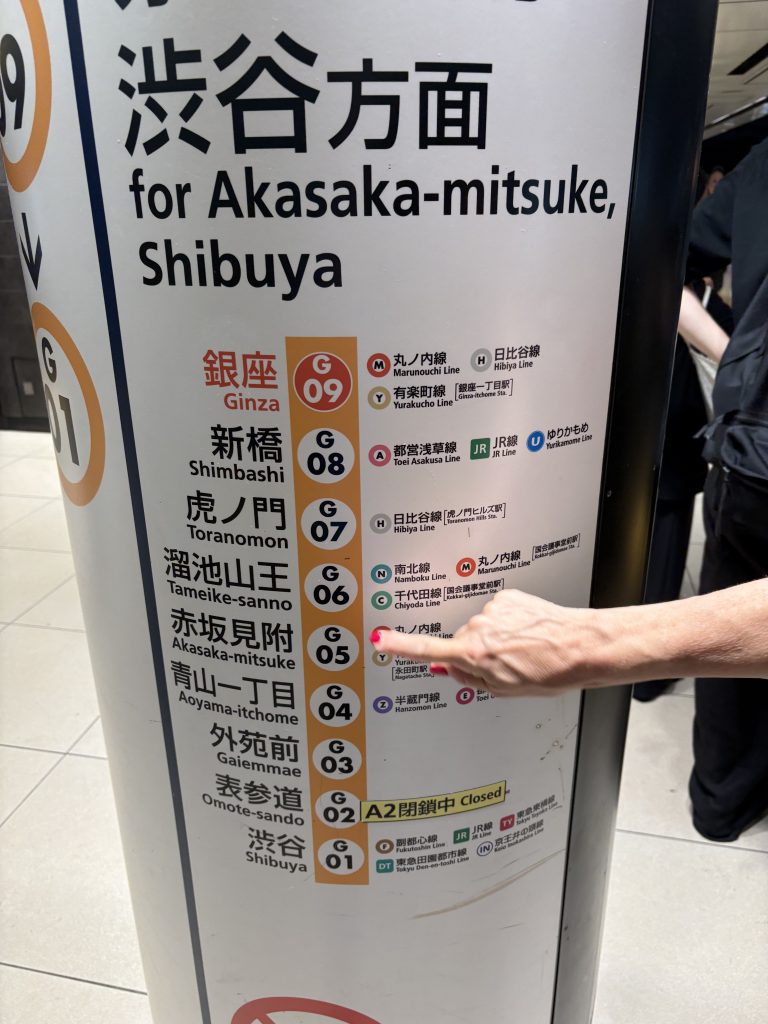
The Tokyo Metro was probably the bit we used most and, weirdly, it’s actually really easy once you stop trying to understand the whole thing.
That is the trick.
Do not look at the whole map.
Nothing good comes from looking at the whole map.
Just find the line you want.
The lines all have colours and letters and the stations have numbers, which is absolutely brilliant when you’re trying to remember Japanese place names.
So instead of remembering some long station name you can just think:
“We’re at G06. We need G09.”
Three stops.
Sorted.
Probably.
We also had the 24-hour Metro ticket, which meant that once we’d bought it we became absolutely determined to get our money’s worth.
Walking ten minutes?
Absolutely not.
There’s a Metro station.
We’ve paid for this.
Get underground.
There were probably journeys where by the time we’d gone down three escalators, walked through the station, waited for a train, travelled one stop and then come back up again we could have walked there twice.
But that isn’t the point.
We had unlimited Metro.
And we were going to use unlimited Metro.
Then there’s JR.
Japan Railways.
Which is not the Metro.
Except it often uses the same stations.
Sort of.
Sometimes.
A station might say “Shibuya” and contain Tokyo Metro, JR and another railway company all in the same enormous building.
Which sounds confusing.
And it is.
But the signs are ridiculously good.
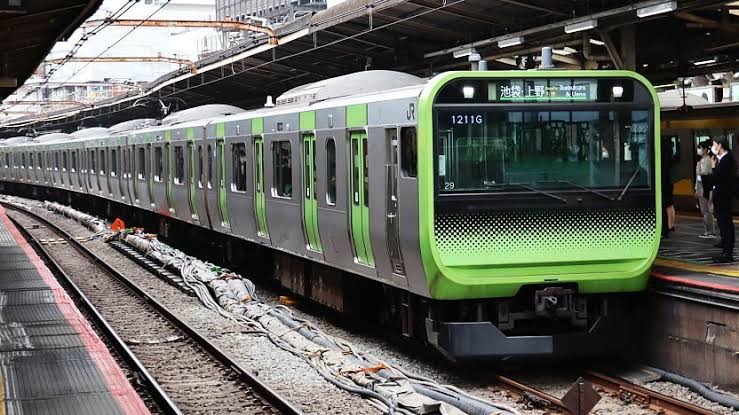
The JR line we got most familiar with was the Yamanote Line.
The green one.
It loops around central Tokyo and stops at loads of places tourists actually want to go.
Shinjuku.
Shibuya.
Tokyo.
Ueno.
Akihabara.
After a while just seeing the green Yamanote signs became comforting.
“Oh good. We know this one.”
There’s something quite satisfying about reaching the stage where you don’t even need Google Maps for every single part of the journey.
You just think:
“Yamanote. Three stops.”
This feeling of competence usually lasted approximately seven minutes.
Because then you arrived at somewhere like Shinjuku.
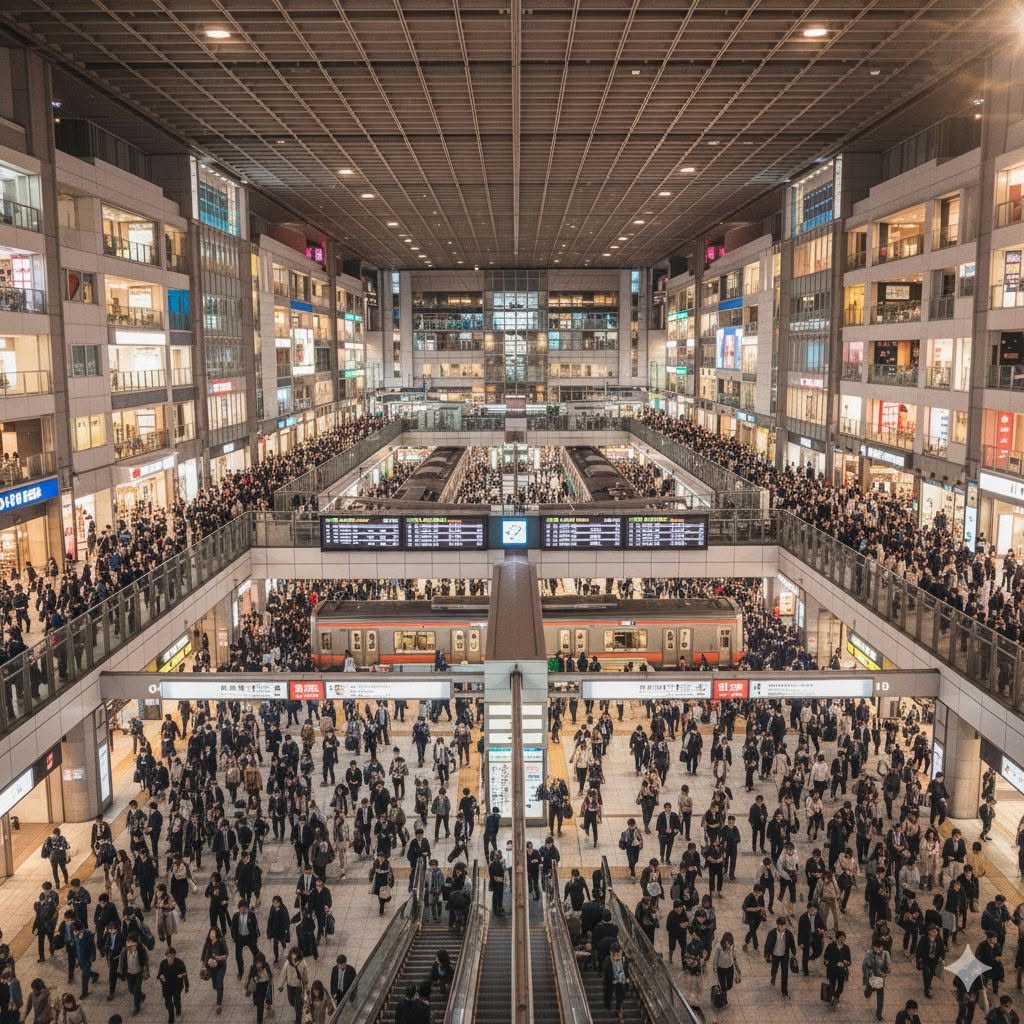
The busiest railway station in the world!
According to Guinness World Records, it serves an average of about 2.7 million passengers per day
Shinjuku Station is not a railway station.
Shinjuku Station is a city.
I’m fairly sure there are people who went into Shinjuku Station in 2017 and still haven’t found the correct exit.
There are shops.
Restaurants.
Department stores.
Underground walkways.
JR.
Metro.
Private railways.
A million signs.
And approximately twelve thousand exits.
You can successfully travel ten miles across Tokyo, get off at exactly the correct station, then lose half an hour trying to get out of the building.
The exit number is important.
Very important.
Google Maps will tell you something like:
“Use Exit B14.”
And initially you think:
“Yeah yeah, whatever. An exit is an exit.”
It isn’t.
Use B14.
Because if you use B12 you may emerge into a completely different version of Tokyo.
We learnt this.
More than once.
Tokyo Station is another good one.
Especially if you’re heading towards Disney.
We had to get the JR Keiyo Line to Maihama.
Easy enough.
Follow signs for Keiyo Line.
So we followed them.
And followed them.
And kept following them.
Down a corridor.
Onto a moving walkway.
Another corridor.
Another moving walkway.
Some stairs.
Some escalators.
More signs.
At one point I genuinely thought we might be walking all the way to Disneyland.
Tokyo Station is enormous anyway but the Keiyo Line seems to have been built somewhere vaguely nearby and then connected to Tokyo Station with a tunnel of determination.
Eventually we found it.
Obviously.
Because somehow, despite all the confusion, we always seemed to find things eventually.
That was basically our Tokyo transport strategy.
Google Maps and Chat GPT
Follow signs.
Occasionally stop.
Look confused.
Find another sign.
Carry on.
Eventually arrive.
And Google Maps in Tokyo is brilliant.
Not just “take the train”.
It tells you the line.
The colour.
The platform.
How many stops.
Sometimes which carriage is best.
Then when you get off it tells you which exit you should use.
Basically, Google Maps became the responsible adult on the holiday, well somebody needed to be.
Then we had the Toei Subway.
Because Tokyo Metro clearly wasn’t enough underground railway.
Toei runs another set of subway lines.
We used the Ōedo Line a couple of times.
The Ōedo Line appears to have been built approximately seventeen miles beneath Tokyo.
You go down an escalator.
Then another escalator.
Then another escalator.
Then you start wondering whether you’re technically still in Japan.
Eventually you reach the platform.
At that depth I half expected the next stop to be Australia.
And obviously the Metro ticket doesn’t necessarily cover Toei because it’s a different operator.
Which is one of those little Tokyo things you gradually discover.
Same city.
Similar trains.
Different company.
Different ticket.
Fair enough.
Then you’ve got all the private railway companies.
Tokyu. Keio. Odakyu. Seibu. Tobu. Keisei.
There are loads of them.
Some head out into the suburbs.
Some come right into central Tokyo.
Some connect directly to Metro lines so the same train can effectively change company while you’re sitting on it.
At which point I decided there were limits to how much of the Tokyo transport system I actually needed to understand.
If Google said stay on the train, I stayed on the train.
Don’t overthink it.
And then there were the noises.
The station melodies.
Possibly my favourite bit.
Tokyo stations have little jingles that play when trains are about to depart.
Not just one generic noise either.
Different stations can have different tunes.
Sometimes different platforms have different tunes.
So you’re standing in this enormous, insanely busy Tokyo station with thousands of people rushing around and suddenly this happy little melody starts playing.
Ding ding diddle-dee-ding.
And everyone gets on the train.
It’s weirdly lovely.
Some of them sound like tiny video game tunes.
Some sound like something from an old Nintendo game.
Some are ridiculously cheerful considering you’re surrounded by commuters heading to work.
And after a few days you start associating those little melodies with Tokyo.
Doors open.
Everyone gets off.
People wait in perfect little queues.
Everyone gets on.
Little tune plays.
Doors close.
Train leaves.
Two minutes later another train arrives.
There’s something hypnotic about it.
Apparently the melodies are partly there to let passengers know the train is about to leave without using harsh alarms all the time.
And some stations have special tunes linked to local places or songs.
Of course they do.
Because Japan has taken something as mundane as “your train is leaving” and somehow made it charming.
The queuing is another thing.
The platforms have markings showing exactly where the doors will stop.
People stand in lines.
Train arrives.
Door stops exactly on the markings.
People on the train get off first.
Then everyone waiting gets on.
This happens without anyone needing to shout instructions.
Nobody wedges themselves into the doorway.
Nobody decides that they personally are more important than everyone getting off.
It just works.
Coming from Britain this can feel almost suspicious.
And the trains are frequent.
Very frequent.
You miss one?
Who cares.
There’ll be another one in about three minutes.
This completely changes your attitude to public transport.
You don’t run desperately towards a closing train thinking:
“THAT’S THE 18:14. THE NEXT ONE IS THURSDAY.”
You just shrug.
Little melody.
Train goes.
Another train comes.
One thing that really surprised me though was just how quickly you adapt to all of it.
On the first day you stand looking at the railway map thinking:
“There is absolutely no chance.”
A few days later you’re casually changing between Metro lines.
You recognise the Yamanote Line.
You know the Ginza Line is orange.
You know that the station number is often more useful than the actual name.
You know to check the exit number.
You know that if Google says the platform is ten minutes away inside Tokyo Station then it probably genuinely is ten minutes away.
You even start recognising some of the station jingles.
And for a brief moment you think:
I’ve cracked Tokyo.
Then you come out of the wrong exit.
Again.
But despite all the railway companies, colours, station codes, endless corridors and occasional journeys towards the centre of the Earth, Tokyo transport ended up being one of the easiest things about the city.
We got absolutely everywhere on it.
Disney.
Shibuya.
Shinjuku.
Akihabara.
Asakusa.
Odaiba.
All over the place.
Sometimes Metro.
Sometimes JR.
Sometimes Toei.
Sometimes something else entirely.
And if you’d asked me exactly which company’s train we were on at certain points I’d have had absolutely no idea.
But it didn’t really matter.
That’s probably the main thing we learnt about Tokyo transport.
You don’t need to understand it.
You just need to understand the next bit.
Find the line.
Find the platform.
Count the stops.
Check the bloody exit.
And listen out for the little tune.

Be First to Comment